
Birding in Mexico
Range maps come to life in the mountains around Mexico City

In February I went to Mexico for two weeks, first to Zihuatanejo, a fishing town that climbs dry slopes above the Pacific, and then over the transvolcanic belt, as it’s known, to Mexico City, a place that still feels unbelievable to me. Birding wasn’t the main reason for my trip, but it was certainly one of the best parts.
When you’re birding in New York, you don’t really have to know the habitat preferences of the birds that are stopping in city parks, though I think it’s still important. They’re migratory, and mostly they need a place with trees to rest and feed for a little while before continuing their journeys. There are degrees, of course. For instance, when I’m looking for a pine warbler this time of year, a lemon-yellow songbird whose arrival is often greeted as the start of spring migration, I’ll check a row of tall white pines on Ocean Hill in Green-Wood Cemetery. Another early migrant, the tiny golden-crowned kinglet, also seems drawn to conifers. But habitat preferences come out in a migrant’s choice of wintering and breeding territories—the endpoints of their migration, places where they’re not on the move.
In Mexico, as in the tropics, it helps to know which birds like a dry tropical forest, or a humid pine-oak forest, or a high-elevation pine forest. There’s so much change across elevation; sometimes all it takes is a couple hundred meters to find a new ecosystem and thus a new suite of birds. I knew this before my trip, and had experienced it in a few places like Arizona’s Sky Islands, but to actually see it in the tropics for the first time was another story. I was fortunate to meet two incredible guides whose knowledge of place was inspiring to me: Santiago Castro in Zihuatanejo and Anuar Lopez in Mexico City.
I was eager to see the endemic birds of these parts of Mexico, and some were fantastical to me: the russet-crowned motmot, with its dark eye shadow and racket tail, and the Mexican squirrel-cuckoo, cinnamon colored with a tail longer than its body, and the red warbler, a bright-red beacon glowing in the shadows of Montezuma pines. I could go on, but I think birding travel stories can typically be summed up as: You had to be there.
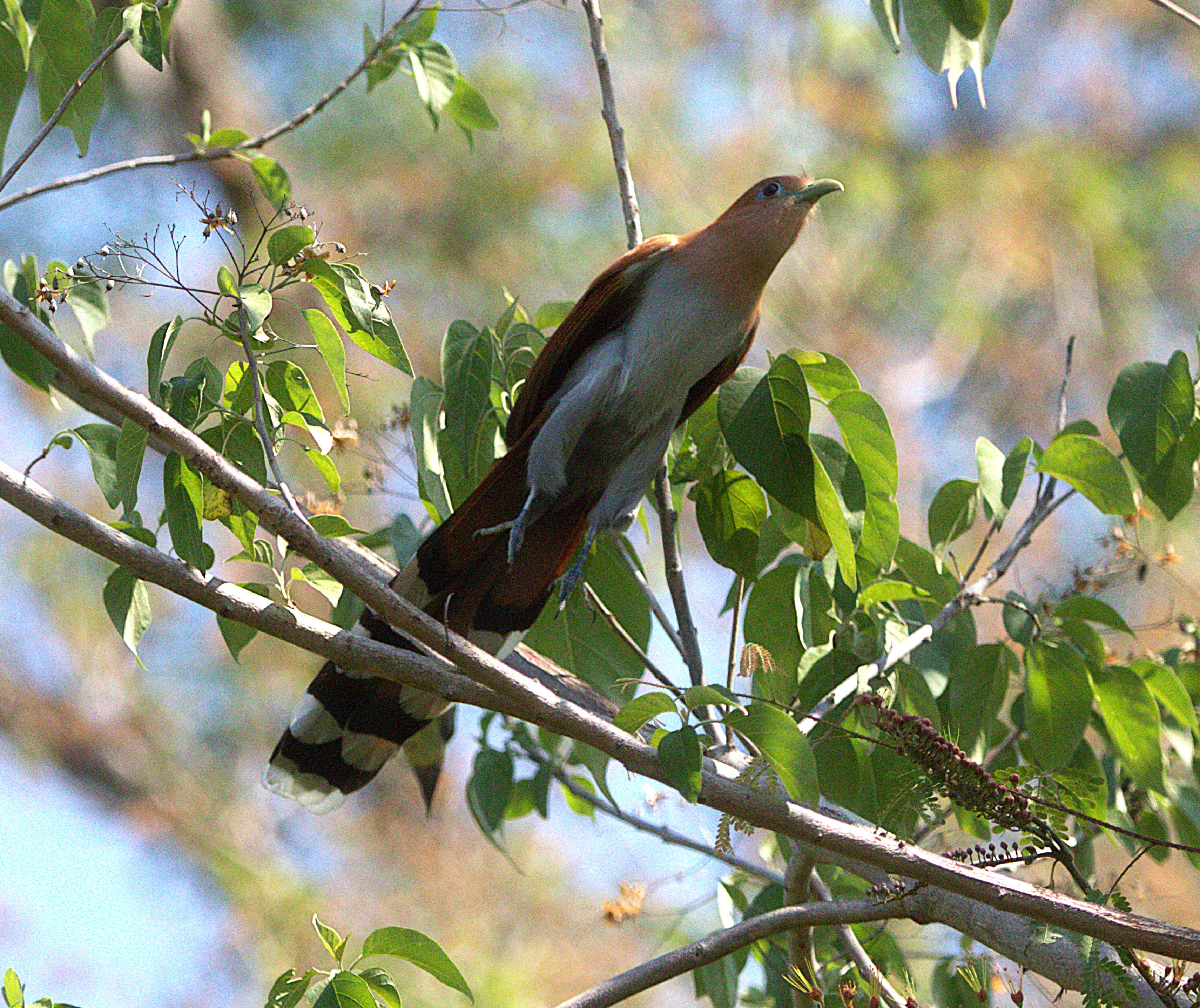
It was an education, with families of birds I don’t see north of the border, like motmots, seedeaters, or woodcreepers. And there were birds I’d seen in those Arizona mountain ranges—flycatchers, warblers, tanagers, doves—that that are more commonly found in Mexico but also hop-scotch their way north to those peaks.
And then, like reminders of home, we saw perhaps a few dozen species that will be migrating through New York in April and May. They cross the Gulf of Mexico on nonstop flights, burning through a third of their body weight. When they returned that way in the fall, they fan out across Mexico. The mountains surrounding Mexico City were particularly exciting in this respect—birds that predominantly breed in western North America were mixing with those that do the same in eastern North America. Orchard and Bullock’s orioles in open pine-oak highlands; black-and-white warblers and orange-crowned warblers in an avocado farm near the Pacific; ruby-throated hummingbirds and broad-billed hummingbirds in scrubby thorn forests. They were joined by birds that weren’t migratory, or not north of the border anyway.
In theory I knew all this—that the birds that migrate to or through the US aren’t ours, and in fact we have less claim to them than someone who lives in their wintering homes—but seeing their range maps come to life brought the world and its ecosystems together for me. In my mind, the high-elevation pine forests of the Sierra Nevada in California were like the high-elevation pine forests around Mexico City; different kinds of pines, yes, and different subspecies in some cases, but the same pygmy nuthatches, the same Steller’s jays, the same hermit thrushes. (That is lest they are eventually split into different species!) Great geographic forces shaped this continent, and birds don’t place any value on arbitrary borders as we do.
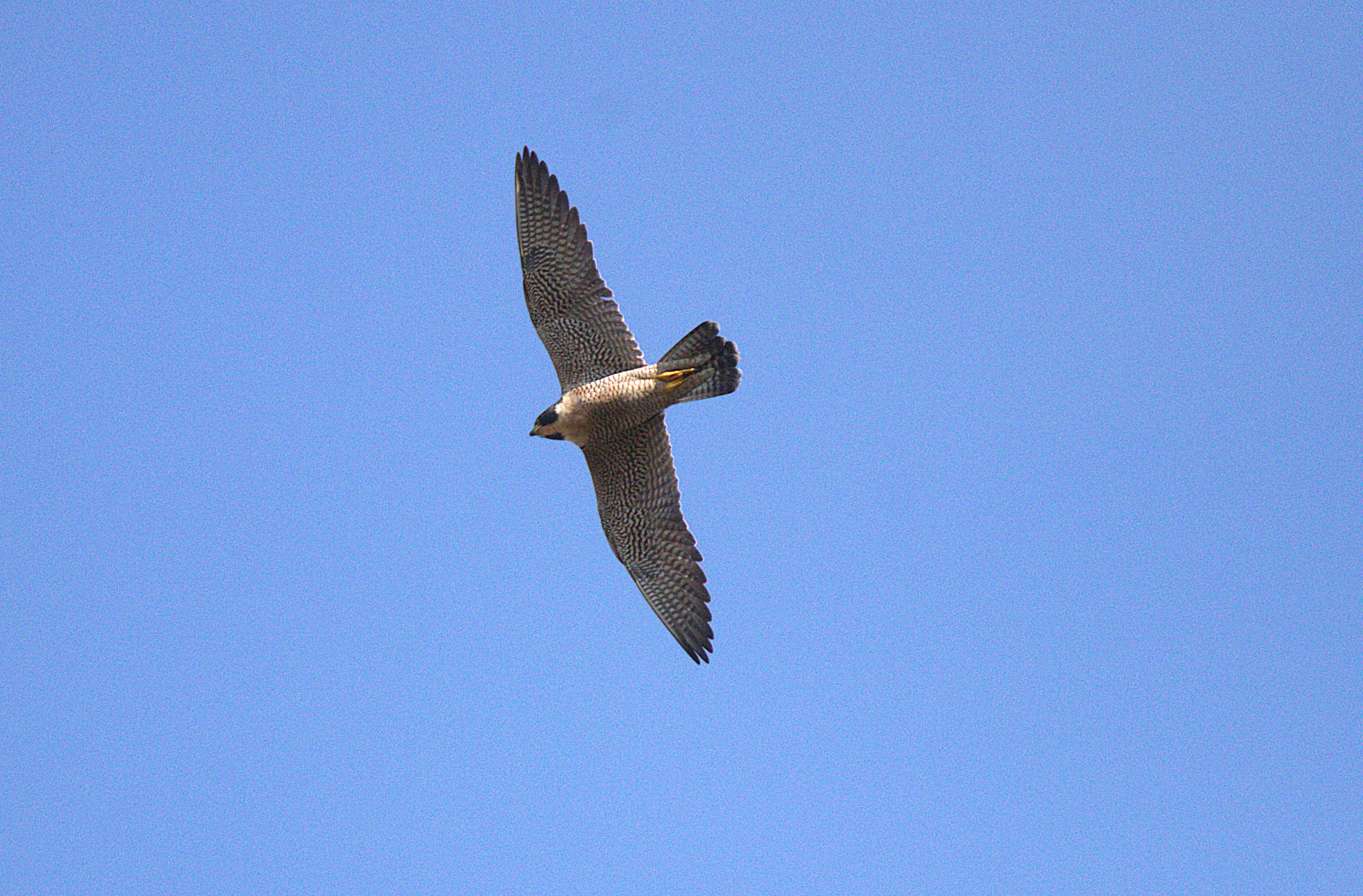
I was left with wonder at birds that adapt to so many different environments across their lives. The black-and-white warbler I saw in a dry coastal forest that was grazed by cattle in parts and felled for avocado or palm trees in others, was getting ready to follow its instinct north to stake its claim to a much different little patch of hardwoods or mixed forest in the eastern US or Canada. The ruby-throated hummingbird I saw could nest in Prospect Park; a pair has for several seasons at the edge of Brooklyn’s last forest. The orchard oriole could end up nesting in an overgrown farm upstate, its chestnut color resembling fallen crabapples.
I also marveled at the adaptations of birds that survive in a city where the homes of 20 million people sprawl over hillsides and volcanic slopes. Hummingbirds in gardens, great egrets and black-crowned night-herons in remnant canals of Lake Texcoco, Inca doves and Bewick’s wrens on terraces and rooftops, and rufous-backed robins I’d hear calling both at dawn and in the fading twilight. Their evening calls sounded like the whistles of fireworks arcing through the sky.
In more news:
If you’re planning a trip to Mexico and would like to enjoy its magnificent birding, let me know and I’ll put you in touch with Santiago Castro or Anuar Lopez. Santiago guides in Guerrero state and Anuar around Mexico City.
This Saturday, I’ll be speaking about my book Bird City with NYC reporter (and birder) Kevin Duggan at the Fountain Bookshop in upper Manhattan. The event begins at noon, and will be followed by a bird walk in Fort Tryon Park. Get a ticket and join us for what should be a fun conversation and outing.
Bird City was published four and a half months ago, but it seems people still want to talk about it, which is exciting. This weekend’s event is the first of several this spring. On April 23, I’ll be at Green-Wood Cemetery’s new green-house talking about migration in the city with Dr. Shannon Curley, one of the main subjects of my book. On April 26, I’ll be speaking at Saw Mill River Audubon’s annual dinner. On May 7, I’ll be moderating a discussion about urban birding at the Center for Brooklyn History. And on May 16, I’ll be giving a presentation at the Biggest Week in American Birding, the popular birding festival in northwest Ohio. I hope to see some familiar faces.
Since my last post, American Scientist reviewed the book, writing, “Whether you’re a city dweller or not, Goldberg provides inspiration for how to move birding beyond a chase for the next bird to a powerful way to make sure wildlife and humans can coexist in our increasingly urbanized world.” And Ken Lamberton, a writer I admire, wrote on his Substack: “This is one of those books that reminds me that nature is a trespasser. Weeds invade. Insects intrude. Rodents transgress. Birds migrate. This we know. But even in the densest landscapes of concrete and asphalt and steel—places where the crush of humanity makes us think the only nature possible is nature degraded—wilderness prevails.”
If you’ve read Bird City and want to share a review or rating on Amazon or Goodreads, every little bit helps. Thank you!
So interesting to see the birds you see in NYC in their winter homes. Sounds like a wonderful trip!
I just went to AZ for the first time and was amazed by the sky islands and how quickly the habitats change with the elevation. Sounds like I need to go to Mexico